

If your family is offered a cell-based intervention for cerebral palsy, clarify three things before travelling: what would be administered, the basis on which the programme operates, and why your particular child is being considered. “We have reviewed the records” does not answer the first two questions. A published trial does not establish the status of a different product at a different institution.
Stemcell China has a page describing its cerebral palsy offering. It can help you prepare questions. The existence of the page does not establish that a particular programme is currently available or authorised for your child.
Identify the product behind the word “cells”
Ask for the product's full name: its source material, whether it uses the child's own material or a donor's, who manufactures it and where administration would take place. The purpose is not to choose cells yourself, but to make it possible to compare the proposal with its supporting documents and research.
For example, cord blood and mesenchymal stromal cells from umbilical cord tissue are not the same product. Similar promotional names do not mean identical composition or preparation. The Stemcell China methods page describes different options; ask which one is actually being discussed in your case.
“We have a certificate” needs clarification too. Ask whether the document concerns manufacturing, a research study or clinical use. Request its title, issuing organisation, date and scope. A photograph of an impressive-looking certificate without this information does not allow you to check the proposal.
Current rules in China
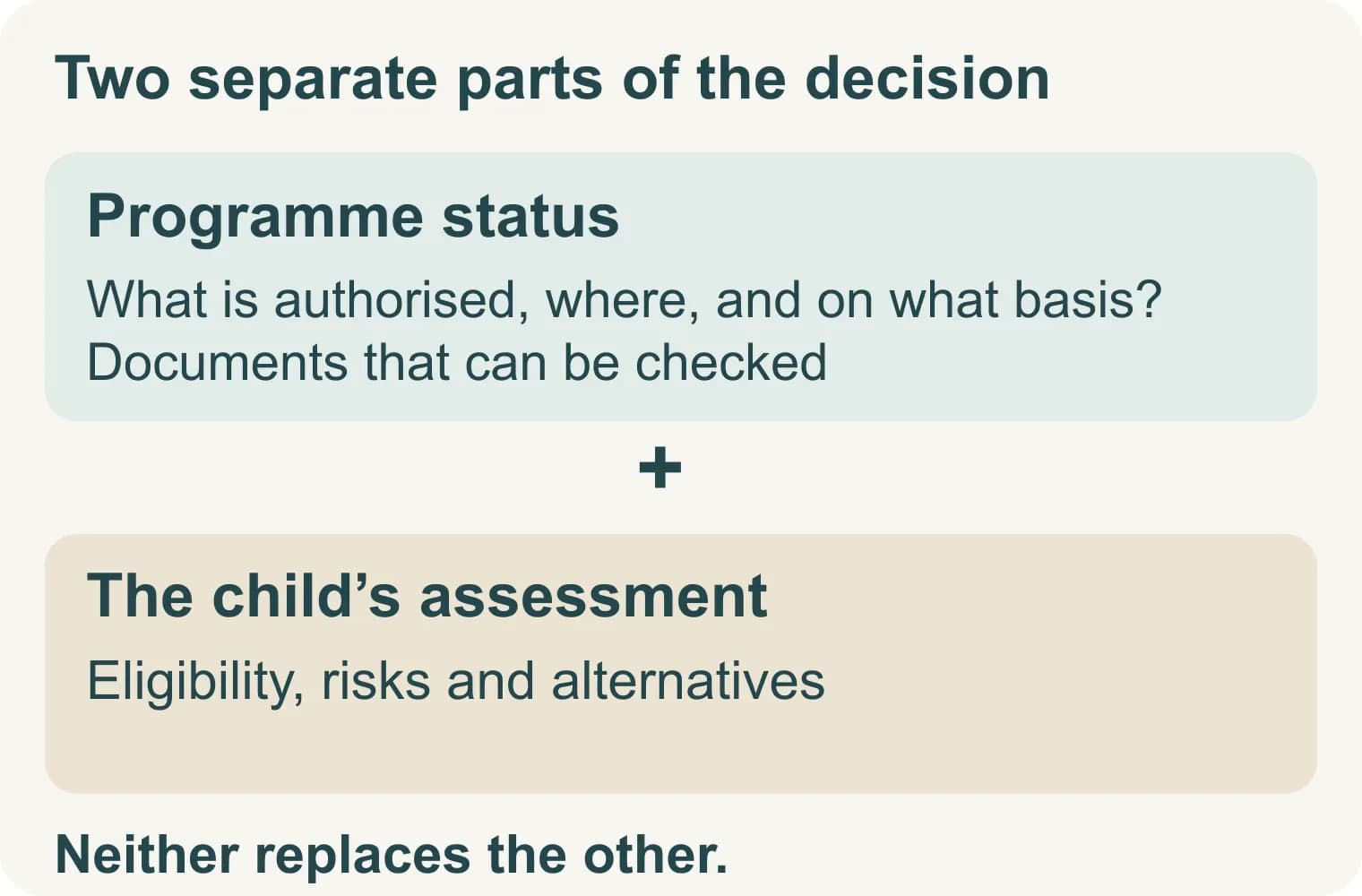
China's Regulation No. 818 on clinical research and clinical application of new biomedical technologies took effect on 1 May 2026. It distinguishes research from approved clinical application, with separate approval for moving to clinical application. It also distinguishes charging arrangements: participants may not be charged research-related costs, while approved clinical application has a different payment framework.
Drug trials follow the drug regulatory route. A clarification issued by China's health authority on 30 April 2026 addresses the distinction between these routes. “It is permitted in China” is therefore not a sufficient answer: the route for the proposed intervention needs to be identified.
The practical question is: “Which document supports this product, this institution and this use for cerebral palsy?” Research registration, approval for clinical application and a medical decision about a child are different things. One cannot stand in for another.
What a cerebral palsy trial can establish
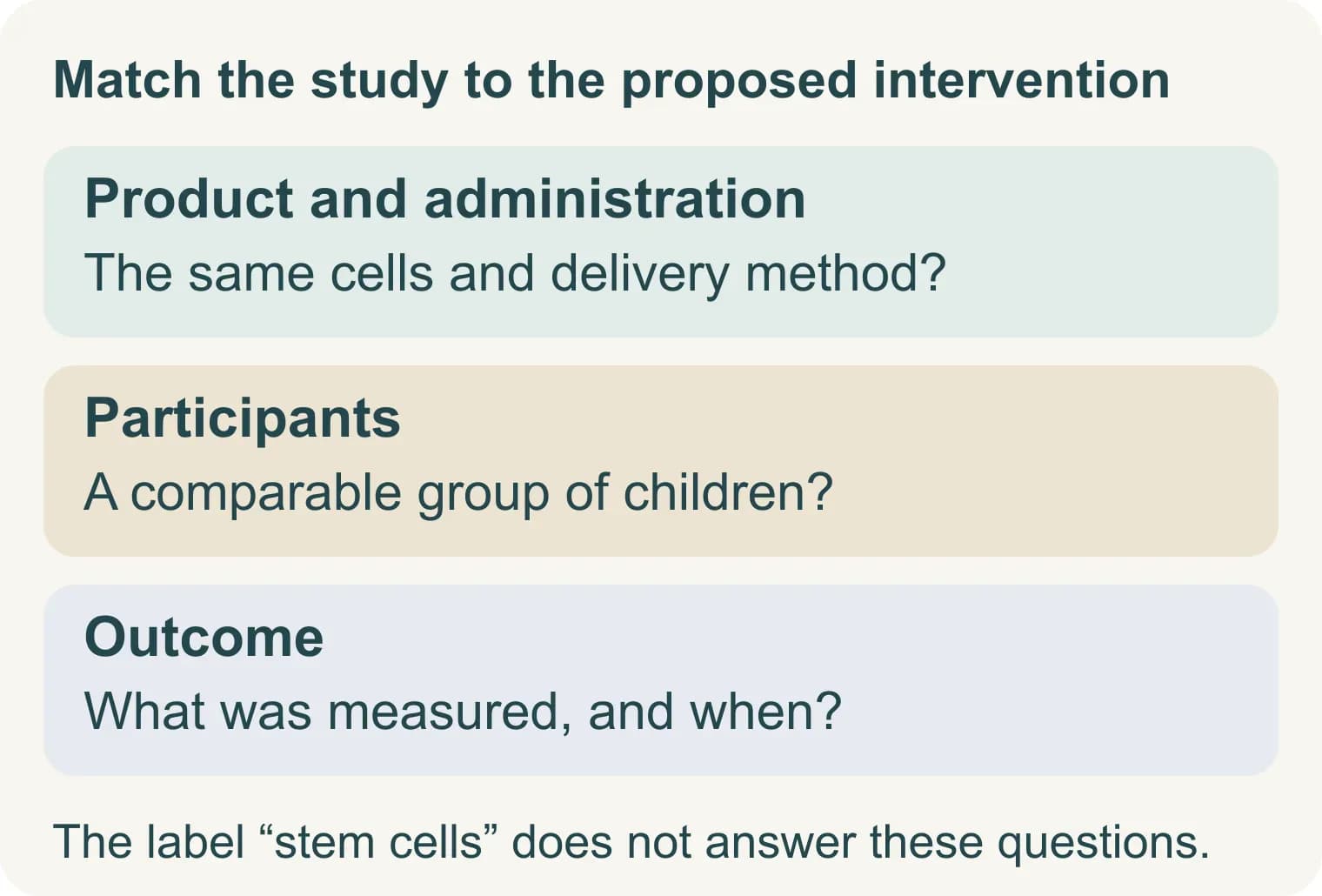
A trial addresses a particular intervention in particular participants. The 2017 study by Sun and colleagues investigated infusions of children's own cord blood in cerebral palsy. The main groups did not differ in average change in GMFM-66 motor function scores at one year; additional analyses found a relationship between outcomes and the dose received.
This study cannot be turned into a promise that any “stem cells” will work, or evidence that all cell-based approaches lack potential. A different product requires relevant supporting data. A promotional success rate or a family's testimonial cannot replace that comparison.
If a publication is cited, ask whether the product, administration route and research question match the proposal. Clarify what counted as an outcome: a change in a movement assessment, an everyday activity or another measure. None of these answers, by itself, means a cure for cerebral palsy.
Preparing records for a case review
The process page describes preliminary review of medical records. Before sending anything, clarify the current requirements, the recipient and a secure way to transfer documents. A request for records is not confirmation of participation.
Useful existing information to prepare for the discussion includes:
- the latest specialist report and history of significant interventions;
- a description of your child's current abilities and difficulties;
- information about associated conditions and current medicines;
- previous investigation results and the rehabilitation plan.
This is a starting point for discussion, not a mandatory package for everyone. Do not repeat MRI scans, laboratory tests or other investigations from a generic internet checklist. The team considering the case should explain why any additional investigation is needed.
What does “suitable” or “not suitable” mean?
Ask for separate answers: is there an appropriate programme, do the records meet its requirements, and has the child's medical assessment been completed? “You can come” is too vague if it is unclear whether the invitation is for a consultation, an assessment or an intervention.
ISSCR guidance on clinical translation emphasises the distinction between research and established care. Research participation does not promise personal benefit. If a child is not included, ask which criterion was applied; this is not a judgement on all their potential for further development.
Before consenting, discuss known risks, uncertain consequences, possible alternatives and withdrawal arrangements. The ISSCR patient guide treats these as part of an informed decision. Separately establish who will follow the child after returning home and whom to contact if their condition changes.
Request the current terms before making travel plans
When contacting Stemcell China, ask for the current case-review arrangements and documents supporting the status of the particular proposal. Discuss the reply with an independent specialist. Until these questions are clear, do not build a trip around a promised intervention or change the child's agreed cerebral palsy care.
This article does not establish authorisation of a particular cell product for cerebral palsy or confirm that the centre can accept a child for a procedure. The next step is to obtain verifiable programme information on which to base a decision.